
“We’ve just exceeded the weight limit by 180 kg.”
But no one at the meeting could say exactly, when that had happened.
The CAD team had updated several assemblies. The purchasing department had approved a change in suppliers. Another department had replaced a material. At the same time, three different Excel files were in circulation.
All of them had weight data.
But no one had the correct weight data.
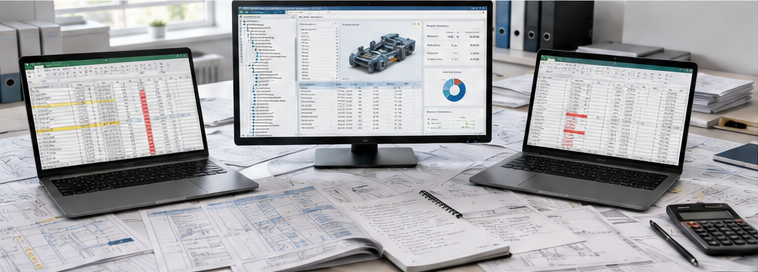
Does this situation sound familiar to you? If so, you're not alone.
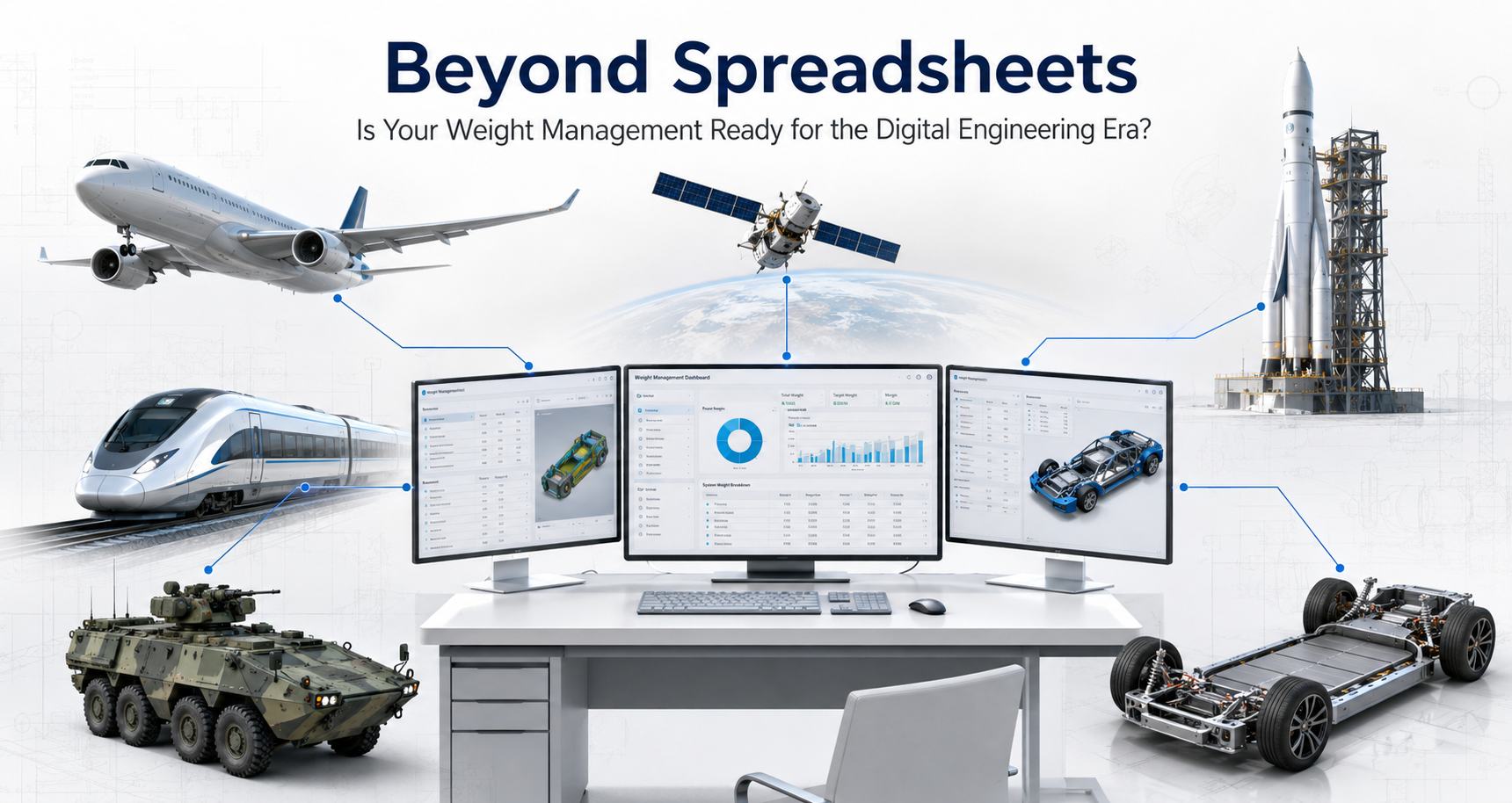
Whether you're developing an aircraft, an electric vehicle, a rail vehicle, a satellite, or a defense system—modern development projects today are simply too complex to manage weight effectively using spreadsheets alone.
Learn how TGM supports complex development programs with predictive technical weight management and the Weight Data Tool (WDT) software → Software – TGM Lightweight Solutions GmbH
1. When Excel Becomes a Hindrance
Twenty years ago, a spreadsheet was often enough.
Today, the reality is different.
A modern vehicle or aircraft consists of tens of thousands of components, numerous product variants, and is developed collaboratively by engineering teams and suppliers worldwide. Every day, designs are modified, components are replaced, or new configurations are created.
Imagine if all these changes had to be maintained manually.
Questions quickly arise, such as:
- Which Excel file is the current one?
- Has this component already been updated?
- Why do two reports differ?
- Which version are we actually considering?
As a result, development teams often spend more time managing data than on actual product development.
2. Weight management is about more than just numbers
Many people associate weight management solely with adding weight.
In fact, the point is, better technical decisions to make.
Professional weight management helps to,
- to identify overweight components early on,
- Monitor weight goals throughout the entire development process,
- To identify opportunities for lightweight construction,
- to improve collaboration between departments and
- to avoid costly changes in the later stages of a project.
The sooner deviations become apparent, the easier and more cost-effective it is to correct them.
TGM helps companies establish a structured, system-wide mass management system → Weight Management & Mass Properties Engineering for Rail Vehicles
3. A Real-World Example
A manufacturer of rail vehicles faced a critical challenge.
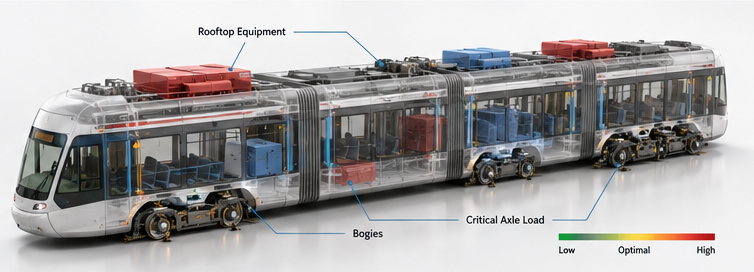
Several bogies exceeded the permissible axle loads. At first glance, the obvious solution seemed to be to reduce the vehicle's total weight.
But was that really the best way?
As part of the digital weight management process, a complete digital vehicle model was first created.
Instead of comparing different Excel files, the engineers were able to evaluate various scenarios immediately.
First, the bogies were repositioned.
The overload decreased.
Roof structures were then installed.
Axle loads continued to improve.
Finally, targeted lightweighting measures and weight-reduction opportunities were implemented.
After each change, the vehicle weight and axle loads were automatically recalculated within a few seconds.
The result wasn't just a lighter tram.
The result was a vehicle that met all axle load requirements—without any time-consuming trial-and-error cycles.
The most important insight?
Better decisions come from better data—not just from less weight.
Contact TGM to develop customized strategies for system-wide weight management and lightweight construction in your industry → Contact – TGM Lightweight Solutions GmbH
4. From an Excel document to digital weight management
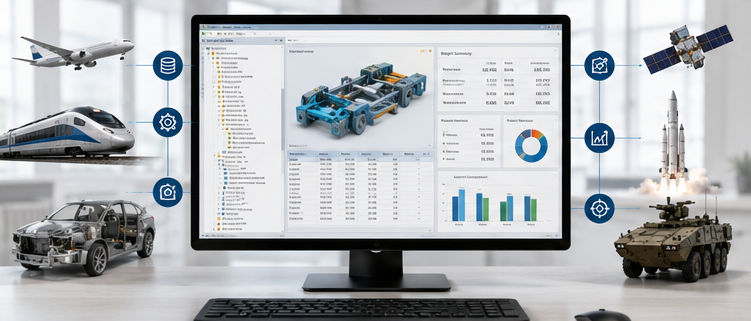
This is where digital engineering is fundamentally changing the way we work.
Instead of maintaining multiple Excel files, development teams work with a central, continuously updated data source.
With the Weight Data Tool (WDT) TGM Lightweight Solutions has developed software that supports exactly this approach.
Rather than simply being a weight database, WDT brings together all weight-related information in a digital environment.
This allows teams to:
- manage complete product structures,
- Track weight changes in real time,
- compare different product variants,
- Track weight goals,
- Calculate mass properties,
- Create reports automatically and
- Identify opportunities for lightweight construction much earlier.
The biggest advantage:
Everyone involved works with the same up-to-date data.
No duplicate files.
No manual copying.
No uncertainty about which version is current.
Are you interested in predictive weight management, mass forecasting, or simulation-based lightweight design? Learn more about TGM's software solutions → Software – TGM Lightweight Solutions GmbH
5. Why This Is Important for All Industries
Although the products differ, nearly all industries face the same challenges.
| Industry | Added Value Through Digital Weight Management |
|---|---|
| Aerospace | Optimization of Payload, Fuel Efficiency, and Certification Requirements |
| Automotive | Support for Lightweight Construction and Range Optimization in Electric Vehicles |
| Rail Vehicles | Optimization of Axle Loads and Vehicle Configurations |
| Space Exploration | Maximizing payload while reducing takeoff weight |
| Defense | Improving Mobility, Transportability, and Operational Readiness |
The common denominator is clear:
Every technical decision is based on reliable weight data.
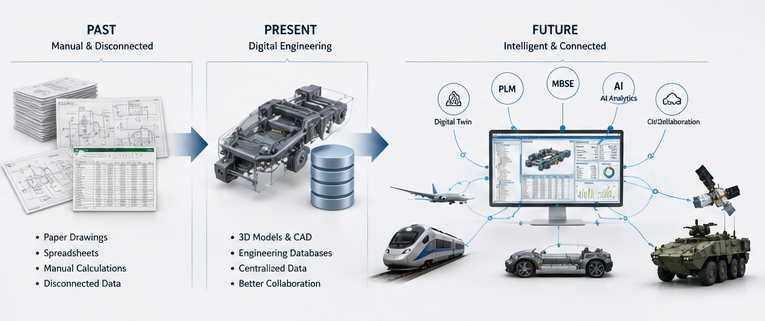
6. The future doesn't mean more Excel
Product development is becoming increasingly digital.
CAD models, digital twins, PLM systems, and model-based systems engineering (MBSE) are already changing the way products are developed.
Weight management should also keep pace with this change.
Digital weight management is no substitute for the expertise of engineers.
It lays the foundation for what matters most in engineering:
Confidence in up-to-date, consistent, and reliable data.
After all, the success of modern development projects doesn't depend on who has the largest Excel file.
Rather, it's about who has access to the best data.
Learn how TGM supports complex development programs with predictive technical weight management and the Weight Data Tool (WDT) software → Software – TGM Lightweight Solutions GmbH
 Deutsch
  English