
The system developed by Astemo Direct Electrified Wheel System is a compact and lightweight drive system for battery electric vehicles (BEVs) that integrates an electric motor, an inverter, and a brake into a single wheel module. Unlike conventional electric vehicles, which use a central electric motor, drive shafts, and a differential, this direct-drive system transmits torque directly to each individual wheel.
This architecture simplifies the powertrain and opens up new possibilities for vehicle integration, chassis design, and interior layout. Most importantly, however, it addresses one of the biggest challenges of in-wheel motors—minimizing the increase in unsprung mass.
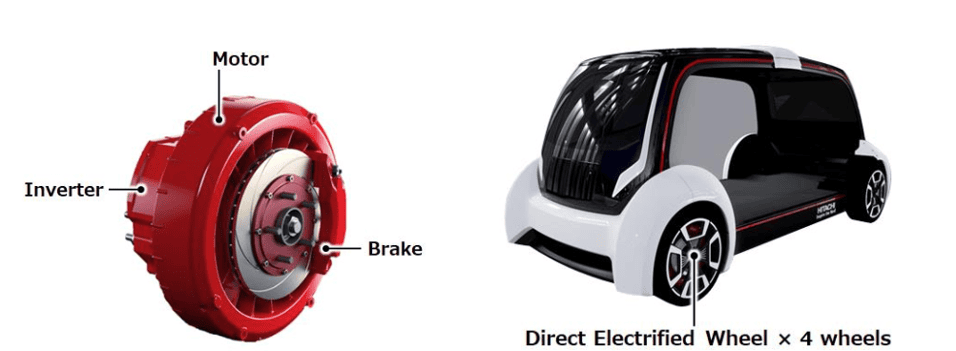
Image source: Astemo. (Astemo is cited as an industry example. TGM has no business or organizational ties to Astemo.)
The technology
The key innovation lies in the integration of several advanced technologies into a single, highly integrated system. Astemo uses a Halbach Array Permanent Magnet Configuration, to maximize the magnetic flux and increase the torque density. At the same time, high-density flat windings—manufactured using a beam welding process—reduce the size and weight of the electric motor.
The motor, inverter, and braking system are fully integrated within the wheel and achieve a world-leading power density of 2.5 kW/kg. By eliminating traditional drivetrain components such as the transmission, differential, and drive shafts, power is transmitted directly to the wheels with fewer mechanical losses. At the same time, installation space efficiency is significantly improved.
The lightweight construction aspect
From the perspective of lightweight construction, this shows that Direct Electrified Wheel System, ...that integration at the system level often offers greater benefits than optimizing individual components. Although wheel hub motors generally increase the mass of the wheels, the high-performance motor with high power density and the integrated architecture significantly mitigate this drawback.
At the same time, eliminating conventional powertrain components reduces the vehicle’s overall weight, creates additional installation space, and enables more flexible chassis architectures. This system is an excellent example of a holistic lightweight design approach, in which multifunctional integration, high-performance electromagnetic design, and a simplified vehicle architecture work together to increase vehicle efficiency, reduce energy consumption, and support the development of the next generation of electric vehicles.
The project illustrates that the greatest potential in lightweight construction often arises not from optimizing individual components, but from redesigning the entire vehicle system.
Read the full article here: https://www.astemo.com/en/news/20250516-01/
 Deutsch
  English