
The Power Grid System
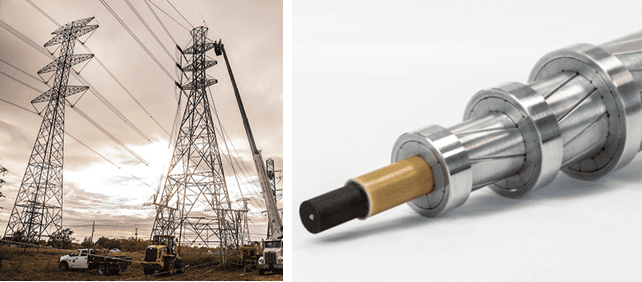
At the heart of this next-generation conductor evolution is HVCRC® (High Voltage Composite Reinforced Conductor) technology, a range of high-performance conductor solutions that replace traditional steel cores with a carbon-glass fiber composite core surrounded by highly conductive aluminum strands. The composite core is manufactured by Epsilon using pultrusion and aerospace-grade carbon fibers combined with a glass-fiber insulation layer that protects against corrosion and improves mechanical flexibility. Compared with conventional aluminum-steel conductors, HVCRC® conductors can double line ampacity, reduce electrical losses by up to roughly 30 %, and dramatically mitigate sag at high temperatures - all while using familiar fittings and installation methods that simplify deployment.
Modern high-voltage power transmission and distribution systems must deliver ever-greater electrical capacity while maintaining reliability and efficiency. Traditional overhead lines use aluminum conductors often reinforced with steel to support mechanical loads, but are increasingly reaching limits in terms of ampacity (current-carrying capacity), thermal sag, and energy losses. To address the rising demand driven by electrification and renewable energy integration, utilities are turning to advanced conductor systems that enhance capacity and reduce losses without costly infrastructure upgrades. These modern grid conductors, deployed for reconductoring and new builds alike, play a crucial role in strengthening networks to handle peak loads and reduce bottlenecks in energy delivery.
The Technology
A core advantage of HVCRC® technology lies in lightweighting: the composite core's high strength-to-weight ratio and low coefficient of thermal expansion significantly reduce the overall weight and thermal sag of conductors. This enables more aluminum to be incorporated for conductivity without adding weight, which in turn lowers electrical resistance and improves efficiency. Because the composite core is lighter and stronger than steel, towers and support structures may require less reinforcement - cutting both capital expenditures and environmental impact. These weight-savings directly support the energy transition by facilitating faster grid upgrades with reduced material use and longer service life, key goals in lightweight engineering applied at infrastructure scale.
 English
  Deutsch