
The lightweight hybrid V6 system unveiled by Horse Powertrain at the 2026 Beijing Auto Show represents a new generation of high-performance hybrid powertrains. At the heart of the system is the HORSE W30, which combines a 3.0-liter V6 engine with a highly integrated hybrid transmission and was developed for both mild-hybrid and full-hybrid applications. With an output of 350–400 kW and torque of 600–700 Nm, the system is designed for performance-oriented hybrid vehicles while placing a strong emphasis on efficiency as well as flexible integration and packaging options.
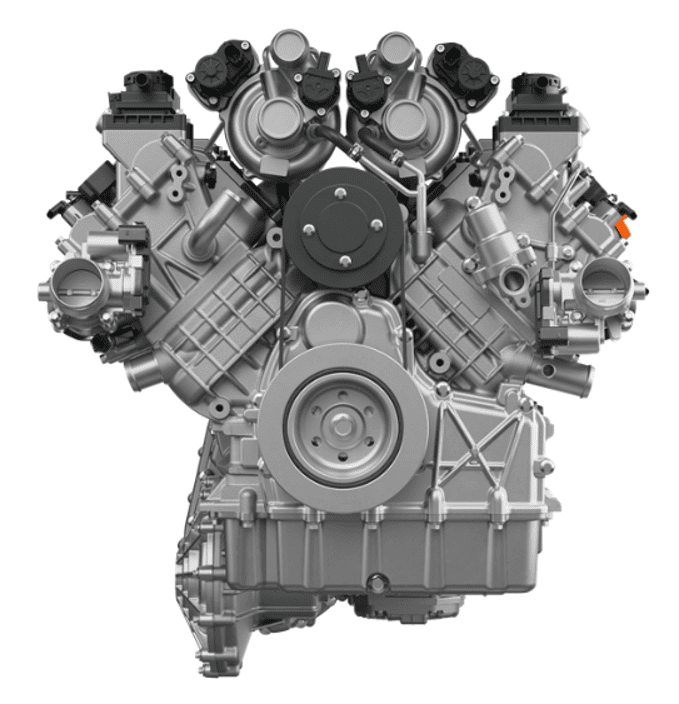
Lightweight hybrid V6 system from Horse Powertrain.
Image source: Horse Powertrain (Horse Powertrain is cited as a current industry example. TGM has no business or organizational ties to Horse Powertrain.)
The technology
At the heart of the system is a comprehensively optimized V6 architecture based on advanced downsizing principles. It draws on experience gained from engines with smaller displacement to achieve exceptionally high power density. The engine is paired with a specially developed hybrid transmission unit (4LDHT) that integrates electric motors, power electronics, and the multi-mode transmission function into a single compact assembly.
This configuration enables seamless interaction between the internal combustion engine and the electric motor, as well as flexible integration into both transverse and longitudinal mounting configurations. The result is a highly integrated powertrain module that reduces complexity at the vehicle level while improving controllability and energy management.
The lightweight construction aspect
From a lightweight construction perspective, the low system weight of only about 160 kg This represents an outstanding achievement. It is thus one of the lightest V6 engines in its class and is approximately 10 kg lighter than the next closest competitor.
This low weight is achieved not only through the use of lightweight materials, but primarily through structural integration, a compact design, and the functional integration of the hybrid components. By directly integrating the electrification system into the transmission and reducing the number of external subsystems, the number of components, interfaces, and fasteners is significantly reduced.
The result is a system-level lightweighting strategy that increases performance while reducing weight and complexity. This leads to more efficient hybrid vehicle platforms with improved overall vehicle characteristics.
Read the full article here: https://news.cision.com/horse-powertrain/r/horse-powertrain-reveals-lightweight-hybrid-v6-system-at-beijing-auto-show-2026,c4338435
 Deutsch
  English